In dialogue with Rousham Gardens with Advolly Richmond OBE
- Gina Dover-Jaques
- May 14
- 4 min read
Updated: 2 hours ago

Introduction
This photographic study follows garden historian Advolly Richmond through Rousham Gardens, observing how historic landscapes are read, navigated, and interpreted through movement and attention.
Working with analogue photography and a deliberately limited number of exposures, the project responds to naturally unfolding moments within the garden rather than staged documentation.
Using a single camera and lens without additional equipment, the photographic process remains physically unobtrusive, allowing attention to remain within the immediate experience of the landscape.
Rousham’s layered history and carefully composed landscape structure offered an ideal setting for observing how gardens are interpreted through movement, attention, and lived experience.
Photographer, author & project developer: Gina Dover-Jaques
Date: 8 May 2026
Read time: 3-4 minutes. Total experience time: 5-7 minutes.
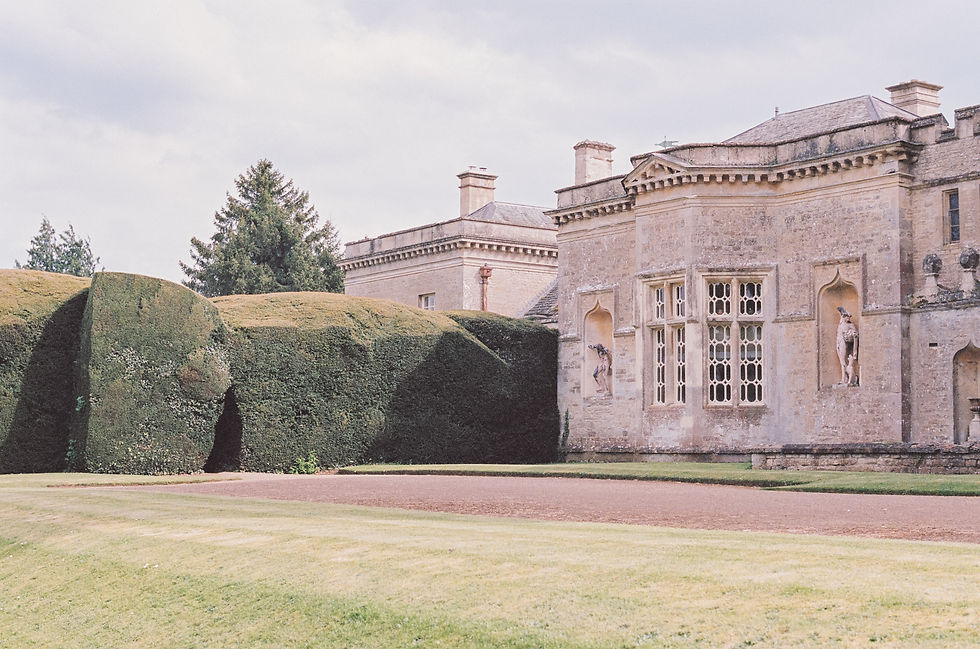
This inaugural collaboration is developed from an ongoing photographic study into how garden experts engage with historic and cultivated landscapes.
Rousham’s layered history and carefully orchestrated spatial experience offered an ideal setting for observing how gardens are actively read through movement, attention, and lived encounter.
Reflecting on the experience afterwards, Richmond described Rousham as “a collection of set masterpieces contained in a limited space.” Certain elements, she observed, are “artfully hidden beneath another,” making movement through the garden essential to experiencing the landscape as William Kent intended.
For Richmond, physically moving through Rousham fundamentally shapes the way the garden is understood, revealing carefully orchestrated sequences of enclosure, revelation, and perspective that unfold gradually through embodied encounter.
Rather than documenting the landscape from a distance, the work follows the shifting relationship between interpreter and place as it unfolds in real time.
Methodology and photographic approach
Richmond was given complete freedom to move through and interpret Rousham independently, allowing responses to arise from her reading of the landscape in real time.
Using a vintage film camera and analogue film, the photographs respond to fleeting moments where gesture, pause, light, and landscape converge.
Rather than directing or staging encounters, the photographer attends to movement as it unfolds through the garden. Moments of stillness, observation, and transition shape both the photographic process and the rhythm of the images.
The analogue process encourages a slower form of looking, where timing, spatial awareness, and attention become inseparable from the act of image-making.

Interpretive framework
Alongside the photographic work, the project incorporates reflective dialogue with Richmond, extending the encounter beyond the images themselves.
Richmond described her engagement with historic gardens as beginning long before entering a site, shaped by reading, archival material, paintings, and historical research. Interpretation, in this sense, continues through movement within the landscape itself.
"I always do my homework before I visit a garden, and approach gardens with an understanding of the creator’s intentions,” Richmond reflected. “Are they trying to tell you something about themselves? What might be the symbolism behind a certain statue or the reasoning behind its placement? For example, the life size statue of Antinous placed at the end of the long and shady walk stands at a crossroads, you must choose your path".
The Bowling Green and Lion mauling a Horse sculpture

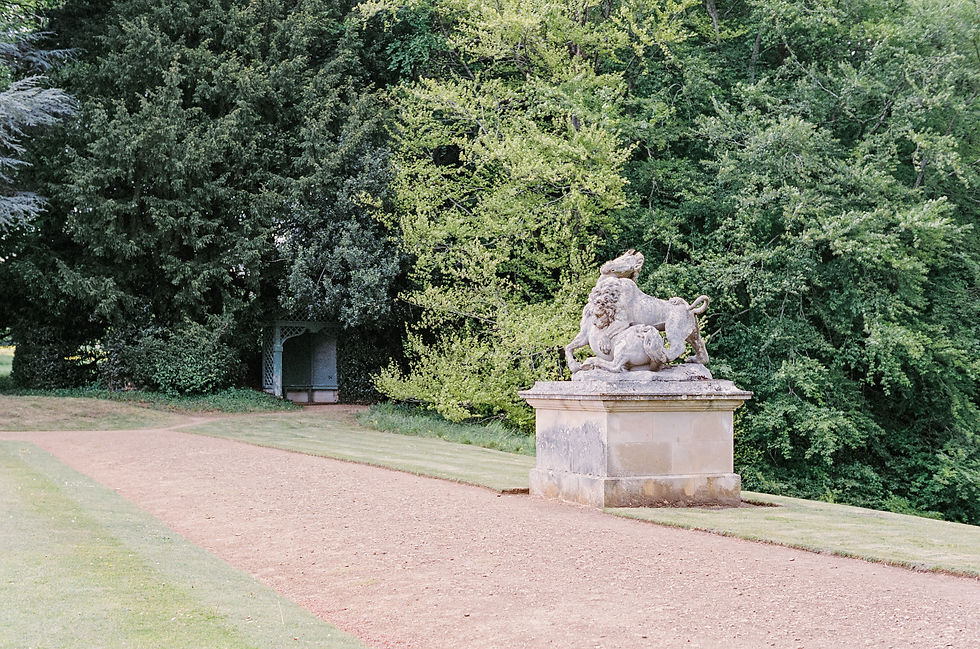

As Advolly moved through Rousham, moments of stillness and close observation revealed the garden as a layered historical structure, continuously negotiated through attention, memory, and spatial experience.
Reflecting on the view from the house across the bowling green towards the Lion attacking a Horse sculpture, Richmond described how “the quiet violence of the statue” compels a moment of reflection before attention shifts towards Kent’s carefully composed distant views and the sham ruin or eye-catcher beyond the landscape, which forms a key element to Kent's design.
The photographs respond to these changing rhythms of quietness, transition and observation that emerge while moving through the landscape.


Photographic outcomes
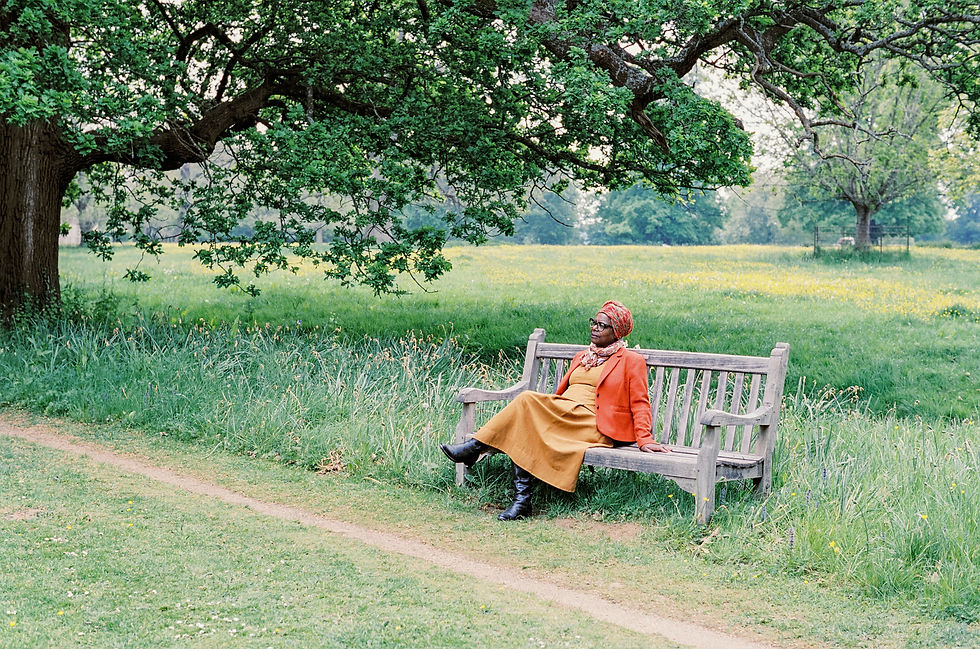
The photographs focus on quiet moments of engagement between a garden historian and the landscape she studies.
Whether pausing beside a sculpture, tracing a boundary line, or reflecting on the historical layers embedded within the garden, Richmond’s interaction with the landscape unfolds as a continuous process of interpretation rooted in direct observation.
“Rousham is best enjoyed and appreciated by immersing yourself in it,” Richmond reflected. “Here in the silence you will hear the echoes of the Italian renaissance, steep yourself in the world of classical mythology and take in the beautiful vignettes as they appear while you move through the garden.”
Throughout the series, the garden emerges not as a backdrop, but as an active presence within the encounter, shaping movement, attention, and ways of seeing.
The project forms an editorial and photographic record of this dialogue between expertise and cultivated landscape.

Statue of Mercury in Bridgeman's Amphitheatre
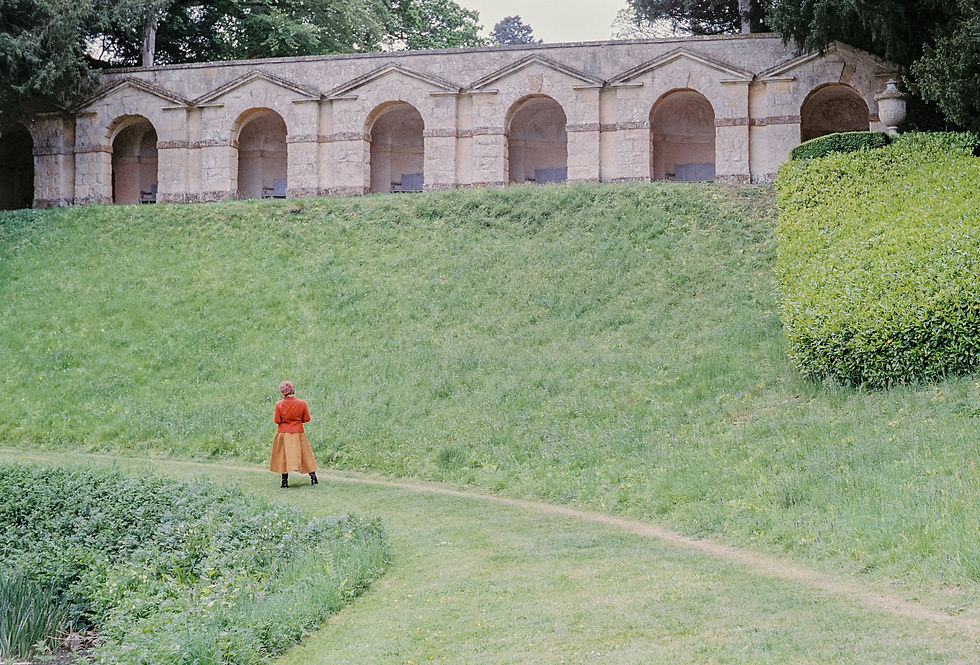
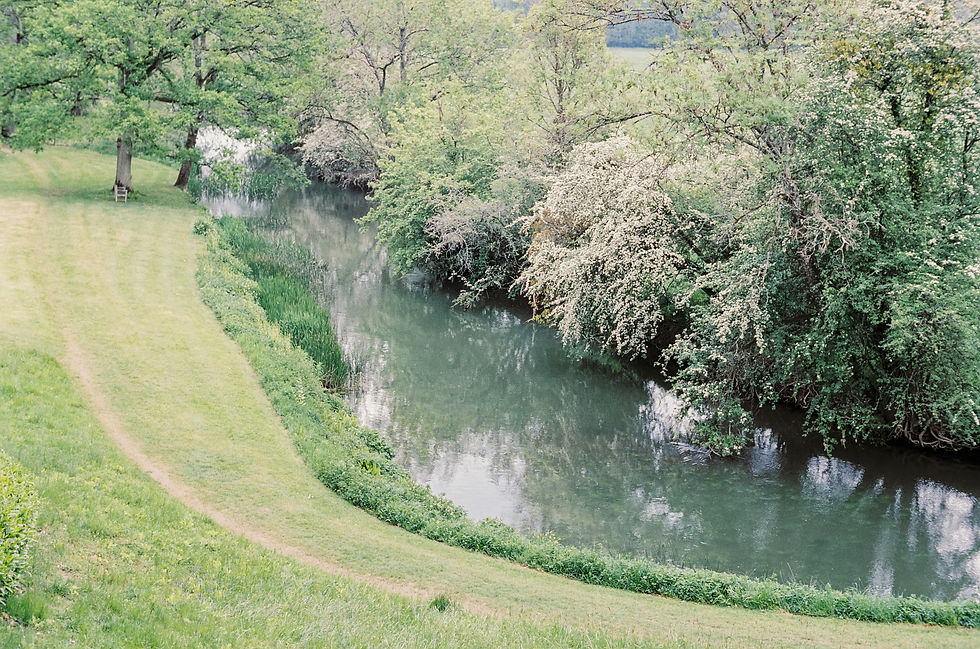
The Praeneste Arcade overlooking the River Cherwell


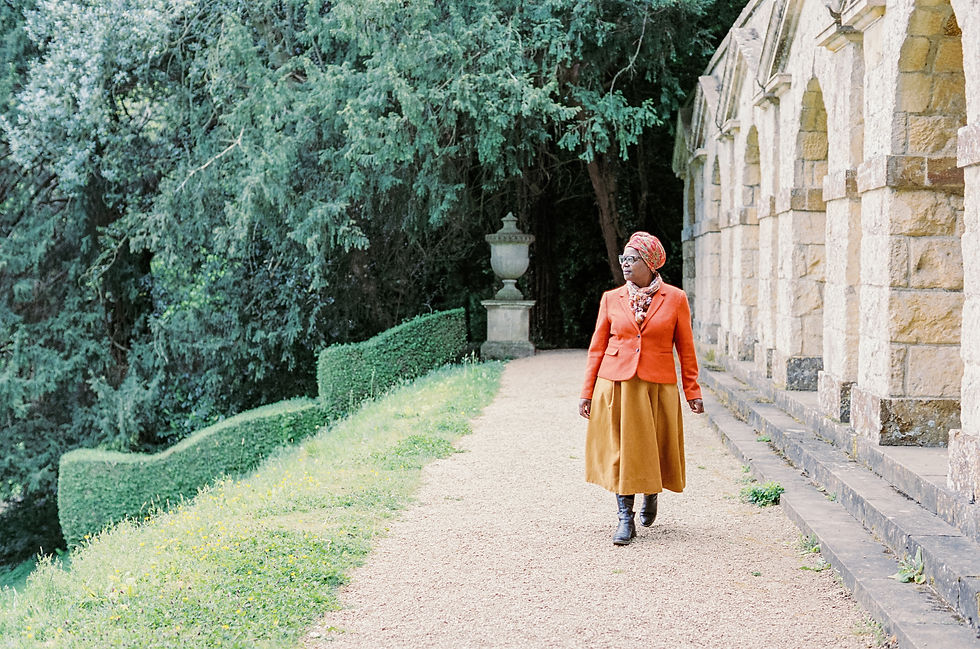

Apollo [Antinous] and the Temple of Echo
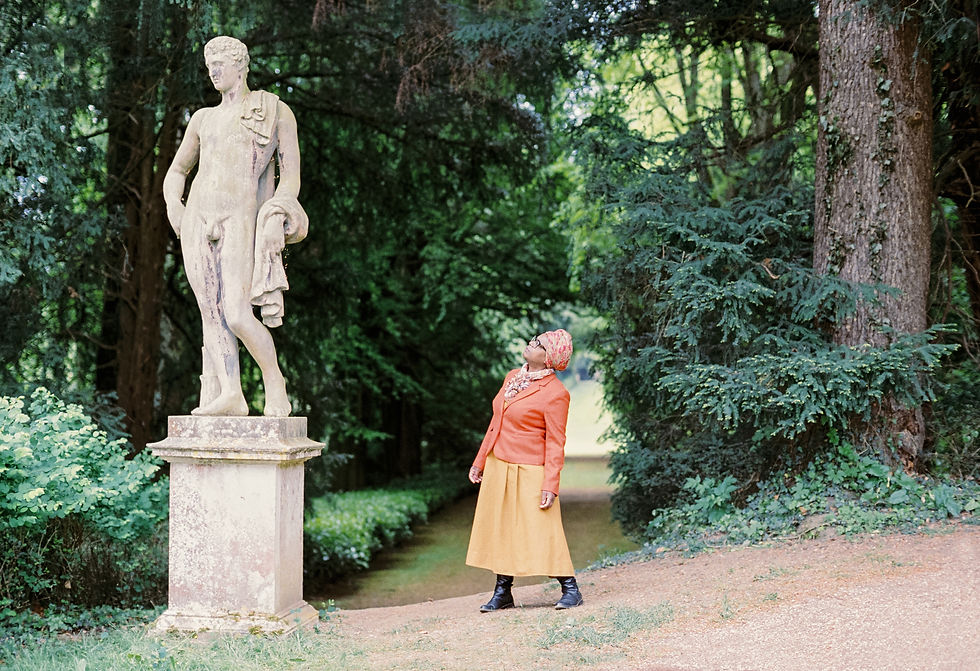
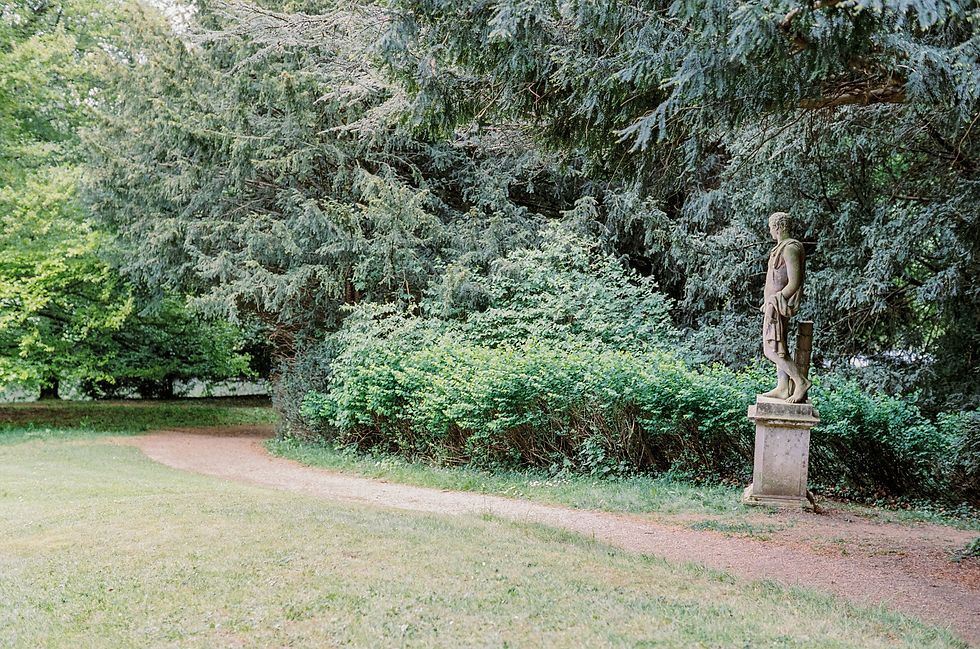
Referencing the life-size statue of Antinous positioned within the garden, Richmond observed how Kent’s placement of sculpture and pathway creates moments of decision and interpretation within the landscape itself.


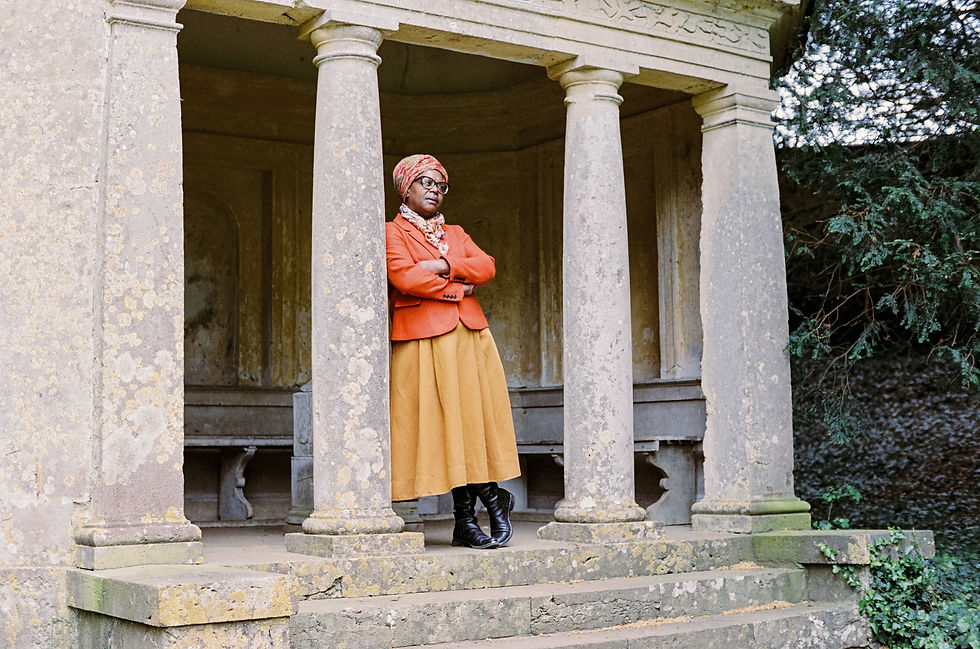
The Lower Garden Rill

Reflecting on moving through the lower garden, Richmond described tracing "the serpentine movement of the rill through the dappled shade" as "a truly magical experience." The design, she observed, gradually leads the visitor towards the octagonal pool before "pulling you onwards into the clearing as your eye is drawn to the Satyr who has probably been up to no good!"
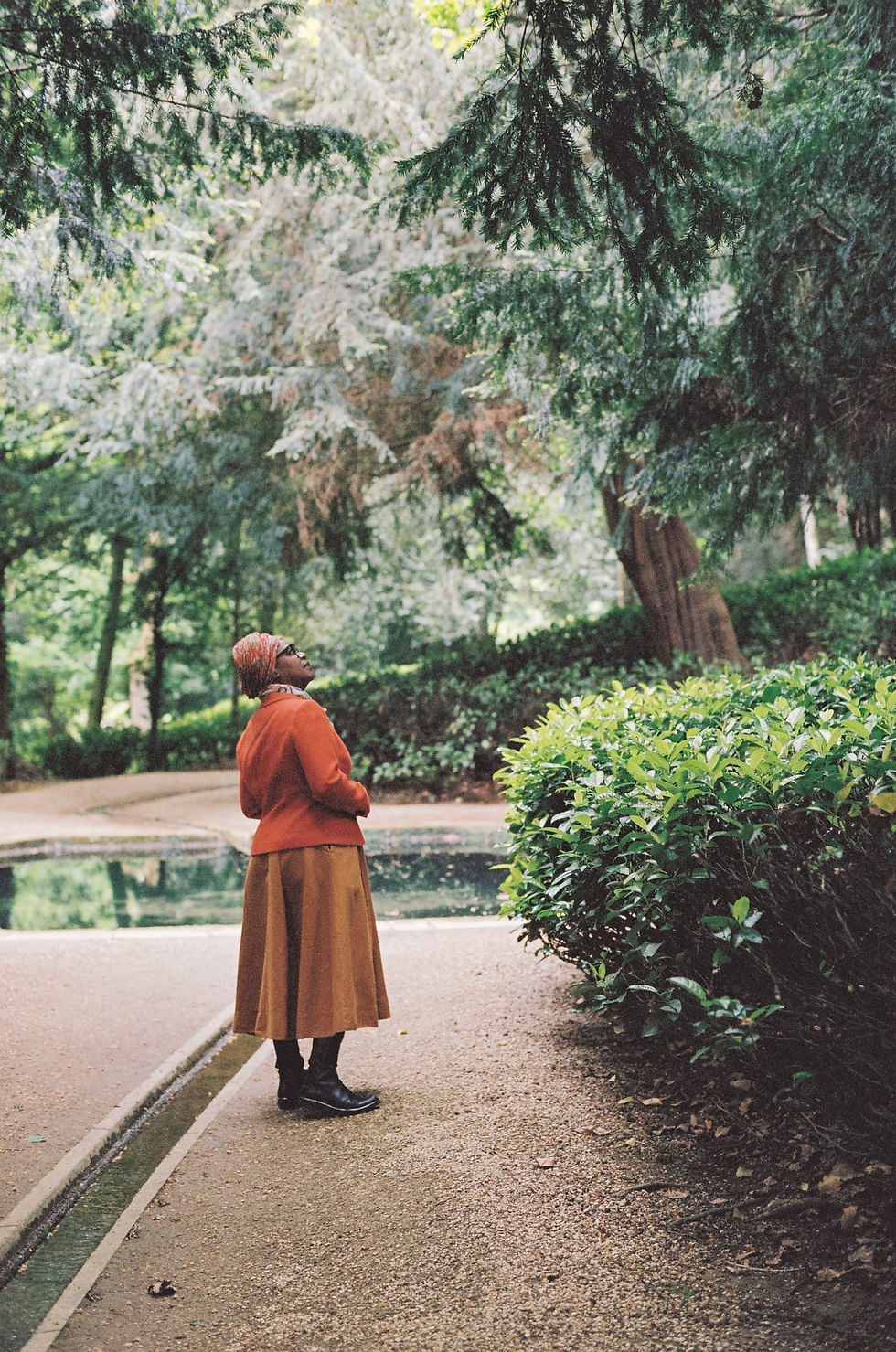
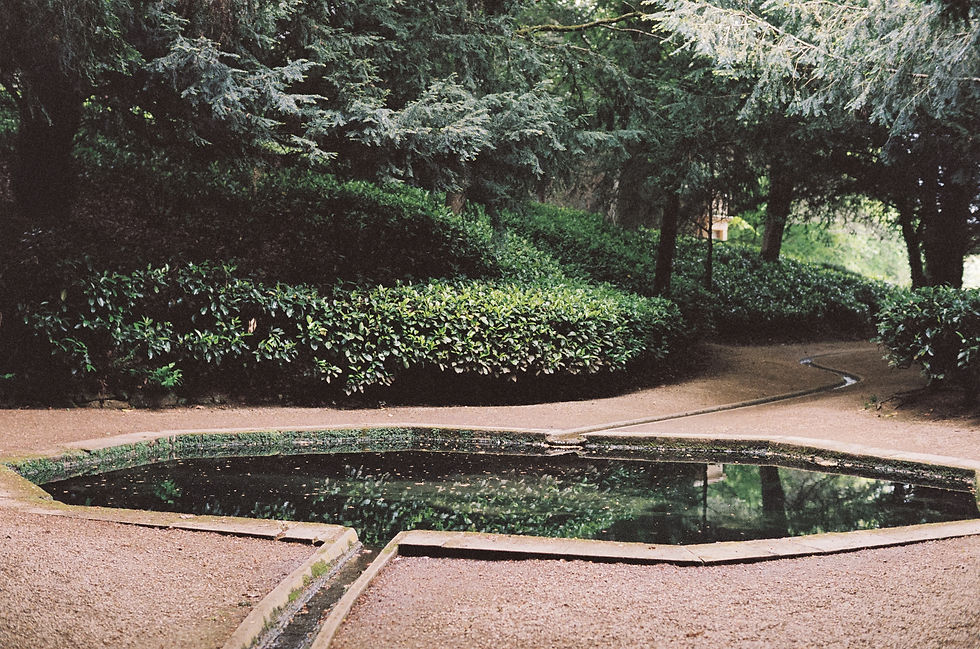
Hexagonal Pool




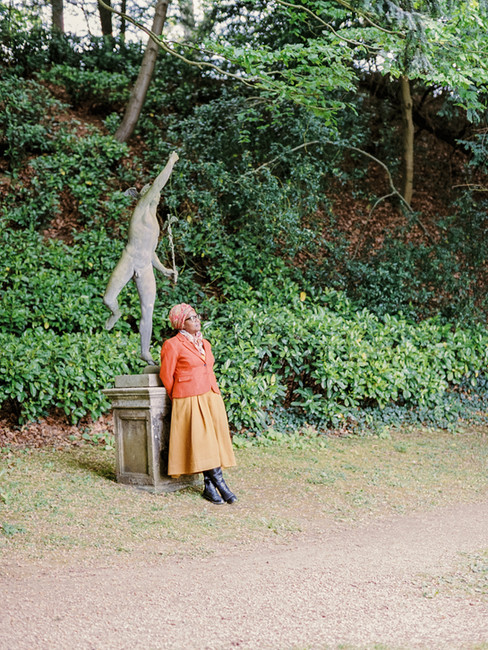
Satyr [Pan]
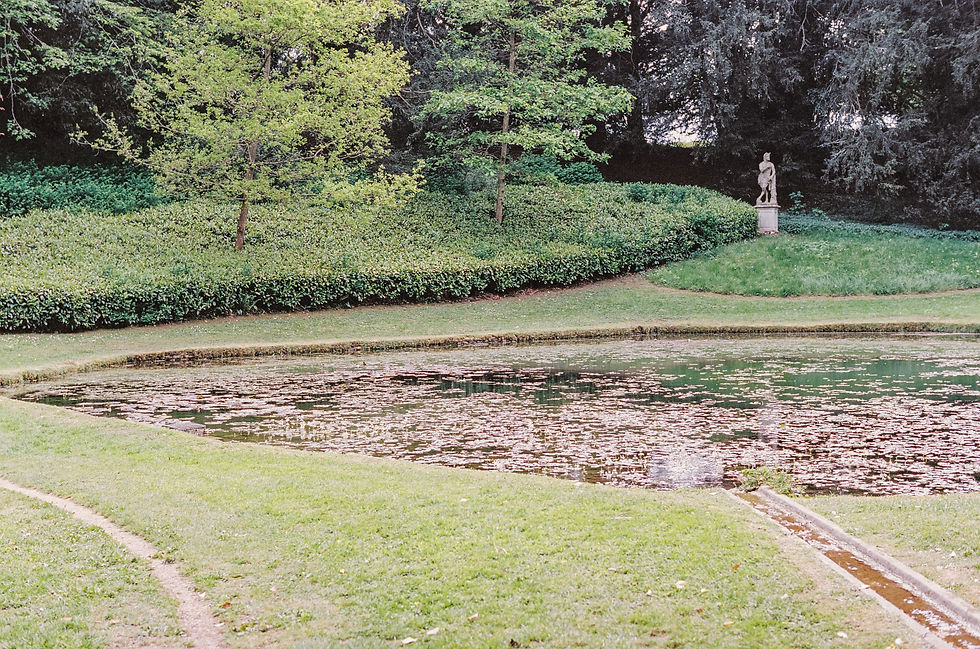
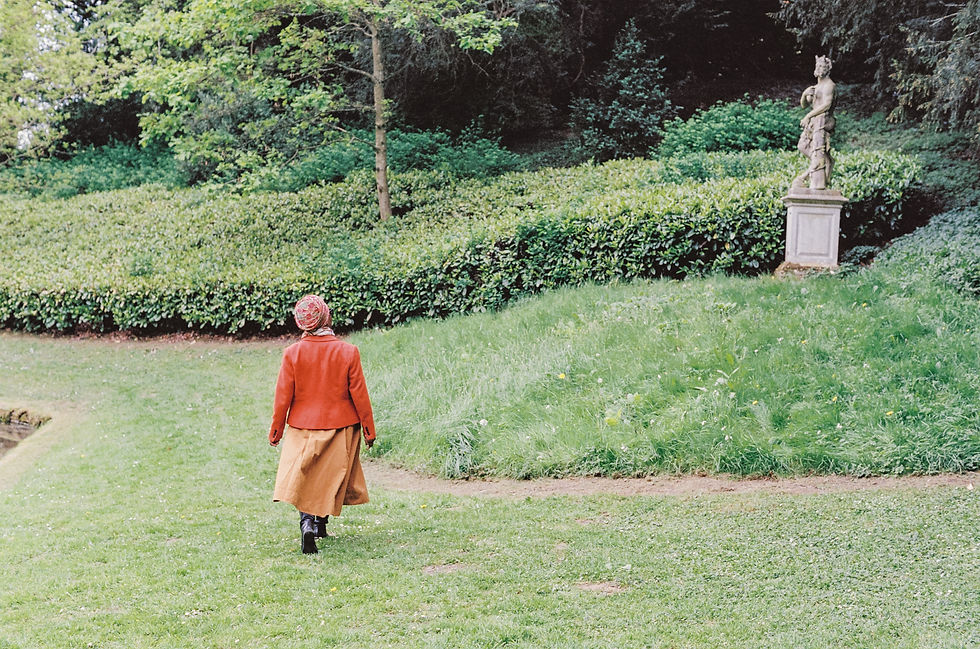
“Rousham is full of mischief, if you know where to look,” remarked Richmond.
The Vale of Venus


The Dying Gladiator
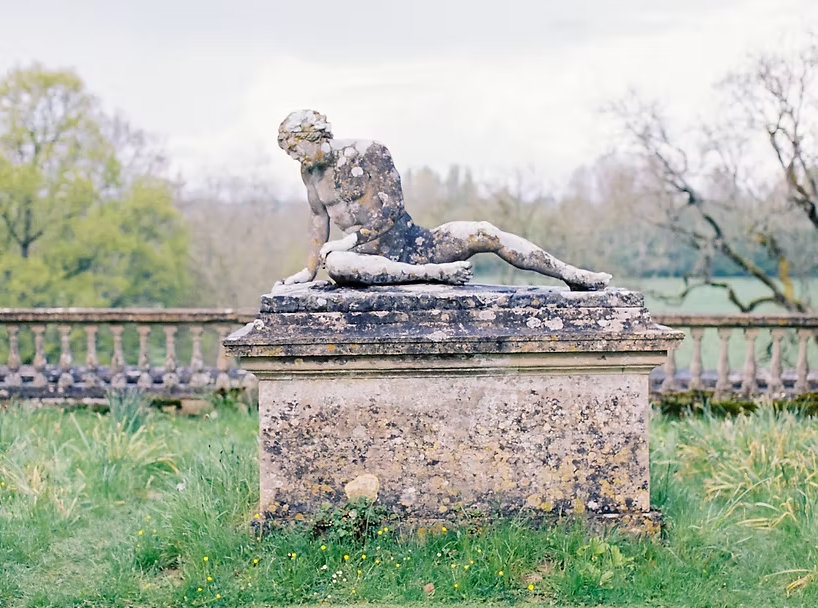
Reflecting on the haunting presence of the Dying Gladiator sculpture, Richmond
observed that "all good gardens provide the visitor with opportunities to be still and absorb the views, atmosphere or specific features". Rousham, she reflected, "excels at this; no matter where you pause there is always something to admire and contemplate."
Richmond questioned whether the figure might allude to Kent’s patron, General James Dormer, wounded during the Battle of Blenheim, a reminder that gardens such as Rousham continue to reveal historical and symbolic layers gradually through sustained attention and immersion.




Conclusion
As an inaugural collaboration, the project establishes the foundation for an evolving series of photographic studies exploring the relationship between landscape, expertise, and lived encounter.
Acknowledgements
With immense gratitude to Advolly Richmond for her generosity, insight, and collaboration throughout this project.
Thanks are also due to Francis Hamel and Ann Starling at Rousham for their time, support, and generosity in facilitating the work.
Information:
Visit Rousham Gardens https://rousham.org/
Provenance and intellectual history: The work is grounded in an analogue photographic process in which negatives, contact sheets, processing records, and annotations form part of the material continuity of the project.
Comments