Reading Rousham: An Observational Study with Advolly Richmond
- Gina Dover-Jaques
- May 14
- 6 min read
Updated: 4 days ago
Using analogue photography, observation and post-visit reflection, this inaugural Reading Gardens study follows garden historian Advolly Richmond through Rousham Gardens in Oxfordshire, exploring how professional knowledge shapes the experience and interpretation of historic landscapes through movement, attention and direct engagement with place.

Introduction
This photographic project forms part of an ongoing series exploring how expertise is formed and expressed through engagement with cultivated and historic landscapes.
During a visit to Rousham Gardens, garden historian Advolly Richmond was given complete freedom to move through the landscape without direction, interruption or commentary. There was no guided route and no intervention in how she chose to experience the garden.
Working with analogue film and a deliberately limited number of exposures, I observed and photographed moments as they unfolded naturally, tracking movement, pause and shifts in attention as Advolly encountered the garden independently.
The aim was not to influence interpretation in real time, but to observe how a garden historian reads a historic landscape through direct engagement with place.
Following the visit, I invited Advolly to respond to written questions developed from what I had observed during the day. Her reflections form a second layer to the work, offering insight into how historic gardens are read through professional knowledge and accumulated experience.
Understanding another person's way of seeing can change our own.
Together, the photographs and written responses explore how historic landscapes are read through professional knowledge, and how meaning emerges through movement, attention and interpretation.
Photography and Text : Gina Dover-Jaques
Date: 8 May 2026
Read time: 2-3 minutes. Total experience time: 4-5 minutes.

Moving Through Rousham
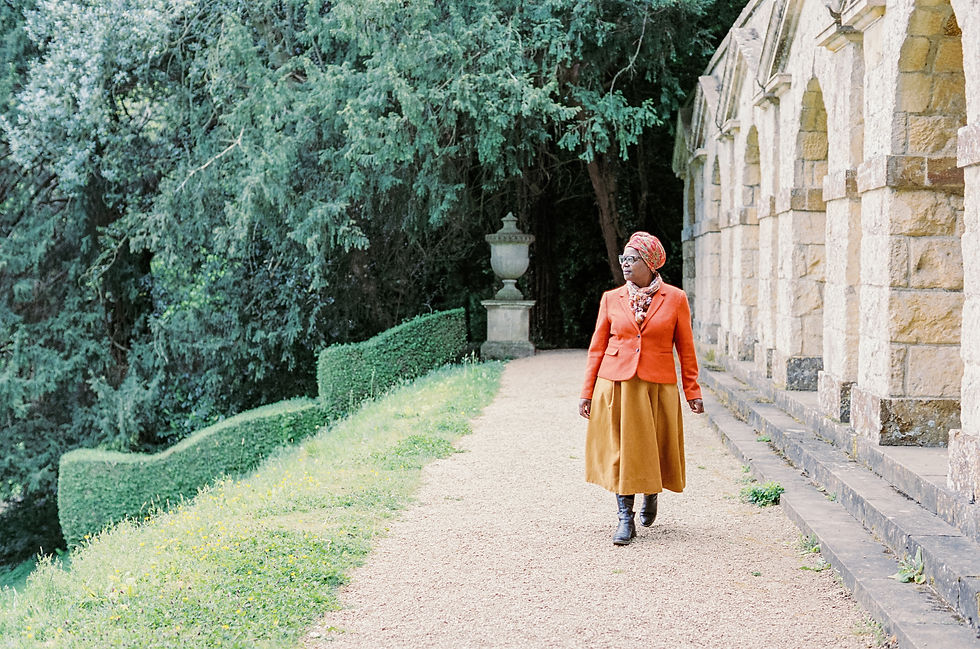
Rousham is often described as one of William Kent’s most complete surviving landscape gardens, yet its character is never revealed in a single view. It emerges gradually through movement.
For Advolly, this is fundamental.
“Rousham is so special, it is a collection of set masterpieces contained in a limited space. Some are artfully hidden beneath another and therefore it is important to move through the gardens as William Kent’s design intended.” Advolly wrote.
Her response highlights a defining quality of the garden: it is experienced sequentially rather than statically. Paths guide direction, views open and close, and attention continually adjusts as the landscape unfolds.
The photographs follow this unfolding structure rather than attempting to present an overview.

Reading Without Guidance
Advolly approaches historic gardens with a preparatory framework formed before arrival.
“I always do my homework before I visit a garden. I approach gardens with an understanding of the creator’s intentions. Are they trying to tell you something about themselves? What might be the symbolism behind a certain statue or the reasoning behind its placement?” Advolly wrote.
This preparation shapes how meaning is encountered within the landscape, directing attention towards symbolism, placement and design intent.

Attention, Pause and Distance
Although movement is central to Rousham, moments of stillness play an equally important role.
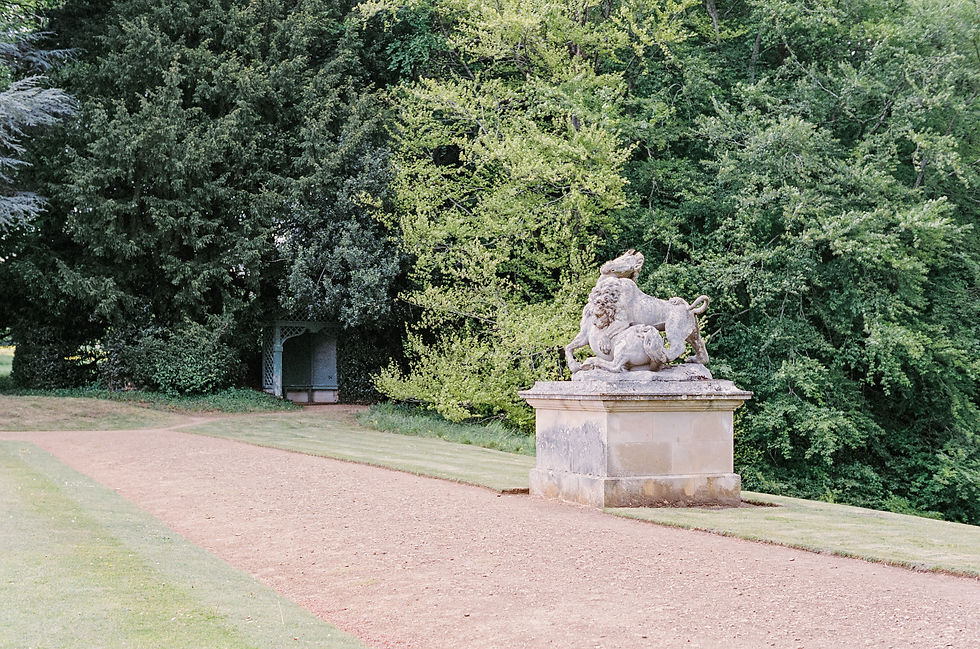
From the house overlooking the bowling green, Advolly reflects on the Lion Attacking a Horse sculpture.
“The quiet violence of the statue makes you pause, before your focus moves to the beautiful views beyond where, if you concentrate, you can see the sham ruin or eye-catcher several miles away in the distance which forms a key element in Kent’s design.” Advolly wrote.
Attention shifts here between immediate form and distant structure. The garden operates through contrast, tension and release, proximity and depth.
These pauses became key points of photographic attention, where movement briefly resolves into still observation.



Immersion and Interpretation
When asked about her broader approach to historic landscapes, Advolly emphasises immersion.
“Rousham is best enjoyed and appreciated by immersing yourself in it. Here in the silence you will hear the echoes of the Italian Renaissance, steep yourself in the world of classical mythology and take in the beautiful vignettes as they appear while you move through the garden.” Advolly wrote.
Interpretation, in this sense, is not detached. It develops through sustained attention within the landscape itself.
Meaning is constructed gradually through movement, recognition and accumulated knowledge.
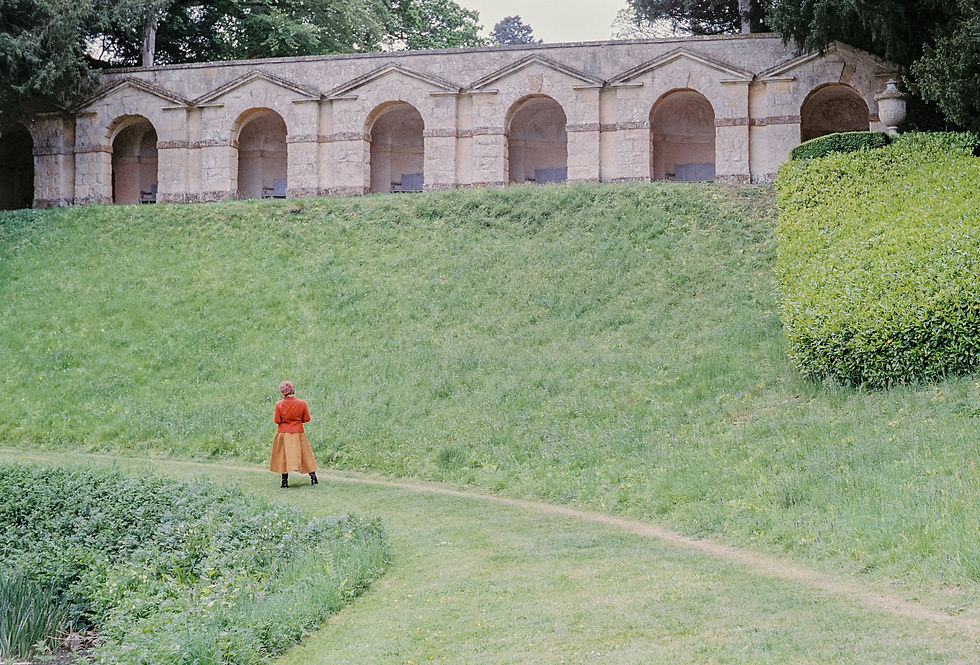
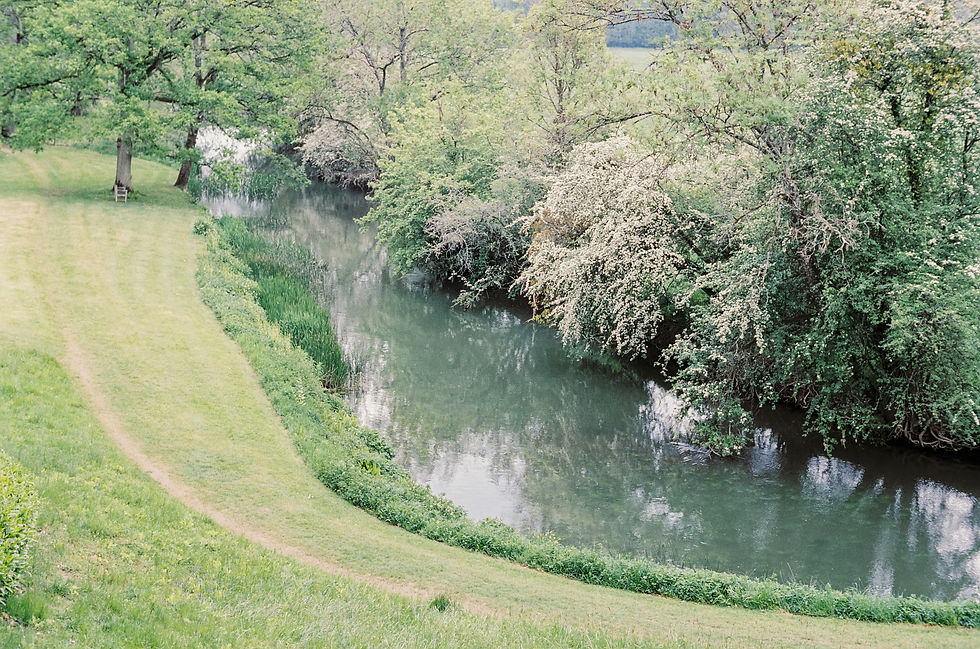
The Praeneste Arcade overlooking the River Cherwell
Antinous and the Temple of Echo
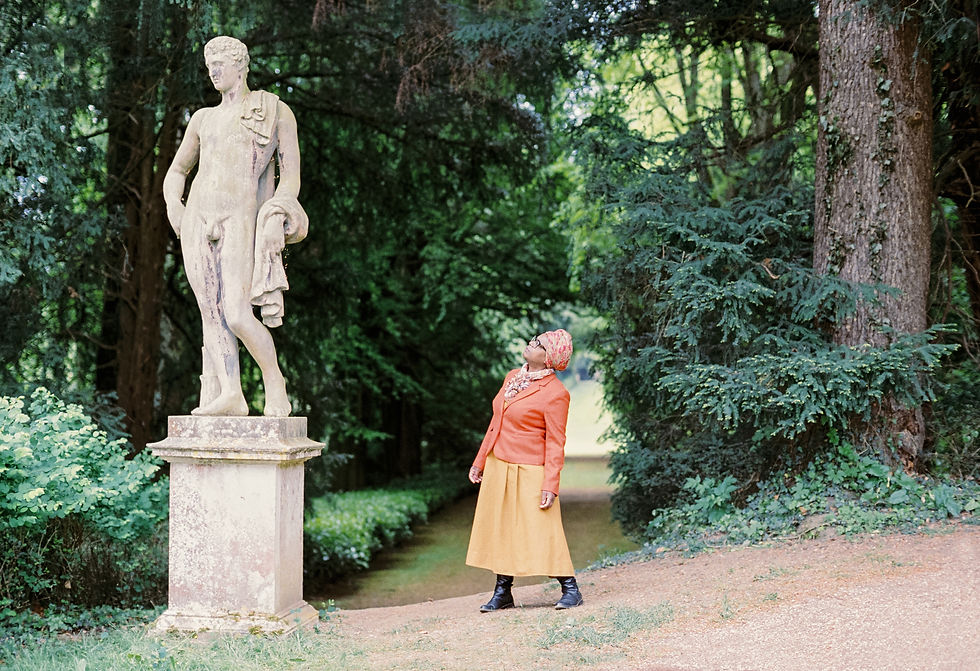
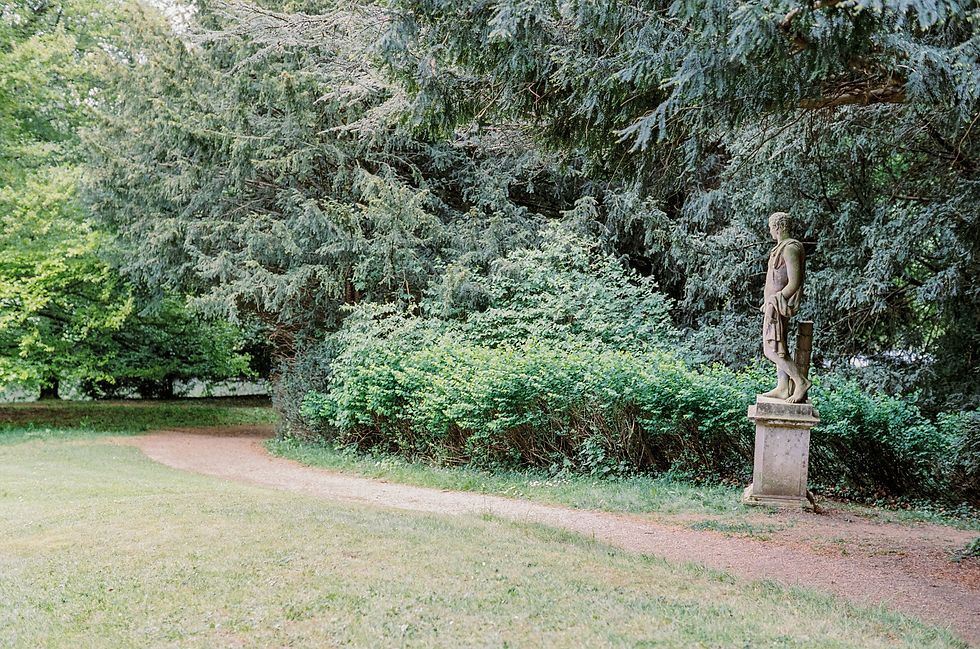
One of the clearest expressions of this interpretive approach appears at the statue of Antinous, positioned along a shaded walk at a crossing point in the garden.
“It stands at a crossroads; you must choose your path.” Advolly wrote.
Rather than functioning simply as a decorative feature, the sculpture becomes a point of orientation within the garden’s wider logic of movement and decision.
The Lower Garden
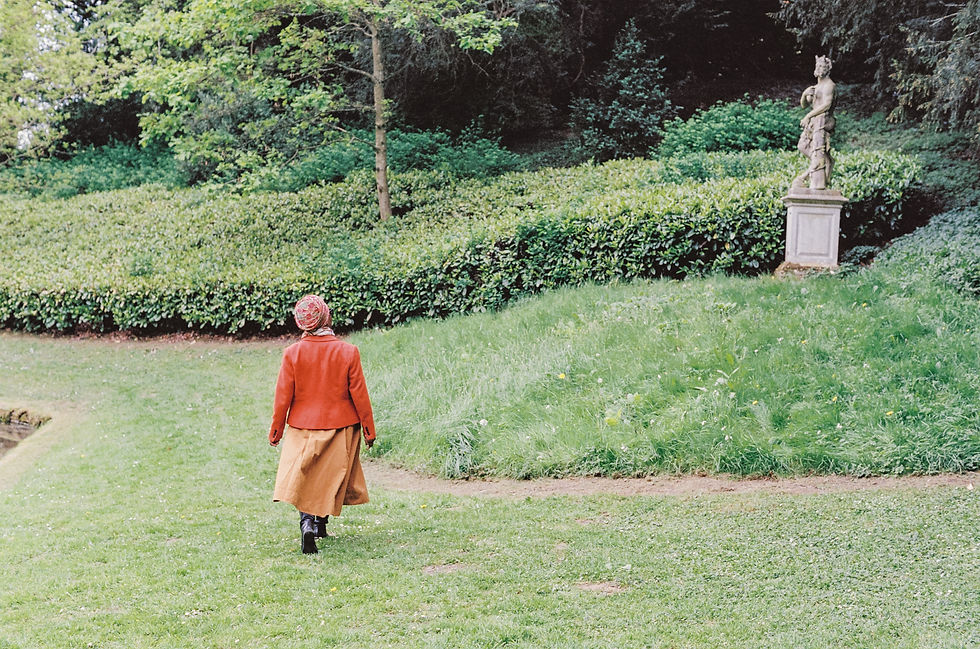
One of the most sustained sequences of attention occurs in the lower garden, following the rill as it moves through shade and light.
“I think tracing the serpentine movement of the rill through the dappled shade was a truly magical experience.” Advolly wrote.

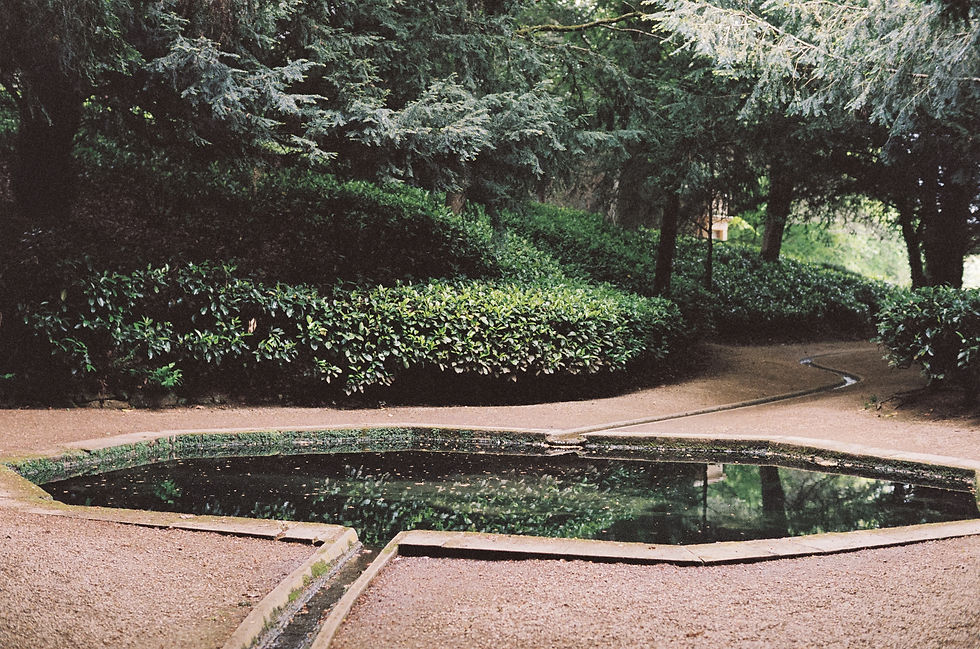
The watercourse leads gradually towards the octagonal Cold Bath pool before opening into a wider clearing.
“Its design leads you to the octagonal Cold Bath pool before pulling you onwards into the clearing as your eye is drawn to the Satyr who has probably been up to no good!” Advolly wrote.
This sense of discovery emerges through movement rather than explanation; features reveal themselves as the visitor progresses through the garden.
Stillness and Reflection
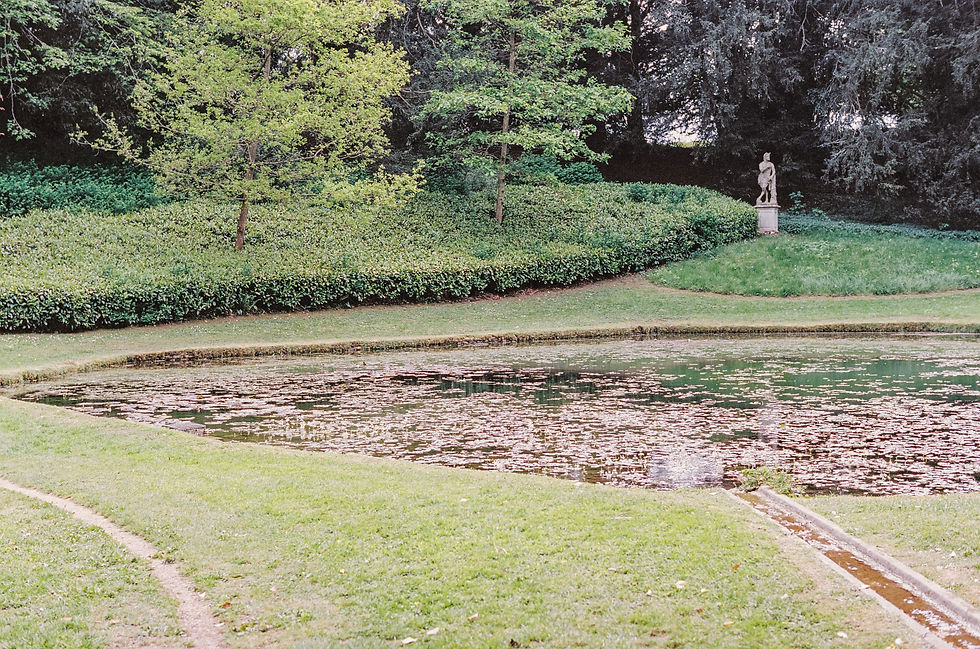
Later in the visit, Advolly reflects on the role of pause and contemplation within designed landscapes.
“All good gardens provide the visitor with opportunities to be still and absorb the views, atmosphere or specific features. Rousham excels at this; no matter where you pause there is always something to admire and contemplate.” Advolly wrote.

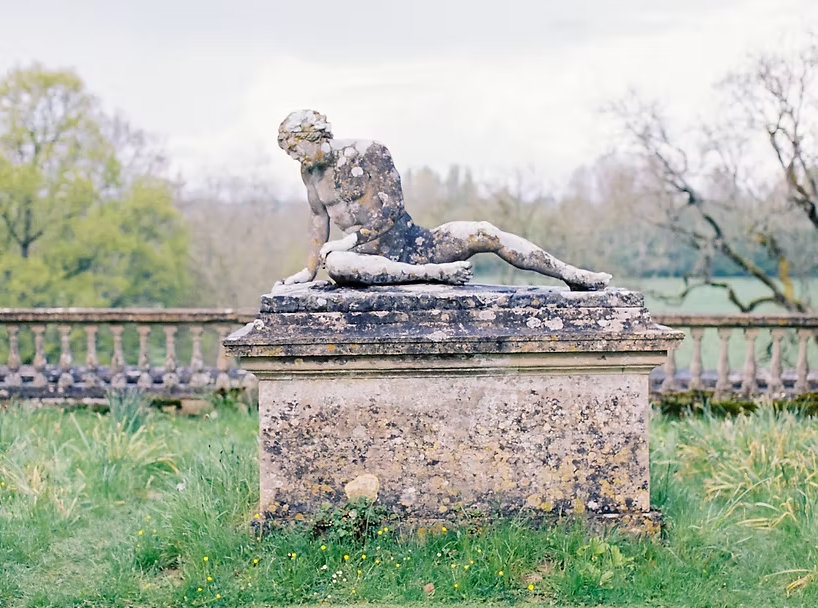
The Dying Gladiator
... Advolly also considers the Dying Gladiator sculpture and its possible connection to William Kent’s patron, General James Dormer, wounded at the Battle of Blenheim.
Whether or not such readings are conclusive, they demonstrate how historic gardens remain open to interpretation, continually reactivated through looking.

Method and Observational Approach
The photographic process was deliberately non-interventionist. Advolly was free to move through Rousham at her own pace, without direction, posing or interruption. I worked quietly with one camera and a limited number of exposures, observing rather than directing as her attention moved through the landscape.
The pace of the visit was deliberately slow and considered. Much of the time I simply observed, occasionally making an exposure or engaging in conversation as we moved through the garden. This allowed the experience to remain natural, with the camera becoming a relatively unobtrusive presence within the wider encounter.
The photographs respond to patterns of engagement as they emerged: where attention settled, where movement paused, what prompted closer observation, and how the structure of the garden influenced the direction of attention.
Following the visit, I invited Advolly to reflect through written questions developed from these observations. Rather than asking her to explain her responses in the moment, the questions allowed her to return to particular observations and experiences with the benefit of time and reflection.
Together, the photographs and subsequent reflections form complementary layers of the study: observation first, reflection afterwards. The intention is not simply to record what an expert knows, but to explore how accumulated knowledge becomes visible through attention, movement and engagement with place.
Conclusion
This project explores how a garden historian reads a landscape through independent engagement with place.
At Rousham, this process becomes visible through movement, pause and attention. The garden is not presented as a fixed composition but encountered as a sequence unfolding over time.
The photographs document this process of looking. Advolly’s written responses extend it.
Together, they offer an account not of Rousham as an object, but of Rousham as it is read.
As an inaugural collaboration, the project marks the beginning of an ongoing photographic series exploring how expertise is expressed through engagement with landscape.
Acknowledgements
With immense gratitude to Advolly Richmond for her generosity, insight, and collaboration throughout this project.
Thanks also to Francis Hamel and Ann Starling at Rousham for their time and support in facilitating the work, and to the Cottrell-Dormer family for their generosity and stewardship of this remarkable garden.
Explore Reading Gardens
Reading Gardens
The wider photographic research project exploring how professional expertise shapes the experience and engagement with gardens: LINK
Method
The observational and analogue photographic approach behind the project: LINK
For Collaborators
How a Reading Gardens collaboration works and what the experience involves: LINK
Information:
Visit Rousham Gardens https://rousham.org/
Learn more about Advolly Richmond https://advolly.co.uk/
Photographic Provenance:
The work is grounded in an analogue photographic process in which negatives, contact sheets, processing records, and annotations form part of the material continuity of the project.
Comments